Veterinary Orthopedic Instruments: Fracture Repair Set
Veterinary orthopedic instruments for small-animal fracture repair: plate and screw sizing, drill guides, depth gauges, bone-holding forceps and cerclage.
 Made in Sialkot · Since 1980
A 20 kg mixed-breed dog comes in with a mid-shaft femoral fracture after a road accident. The surgeon’s plan is a 3.5 mm plate with a lag screw across the oblique fracture line. Whether that plan succeeds in theatre depends on a tray that most small-animal clinics assemble piece by piece over years — drill guides that match the screw system, a depth gauge that reads true, bone-holding forceps that grip without crushing, and a plate bender that shapes hardware to a curved canine femur.
Veterinary orthopedic surgery borrows its principles from human AO technique, but the instruments are scaled and selected for animals that range from a 2 kg cat to a 700 kg horse. This guide covers the small-animal fracture-repair set: what belongs in it, how the sizes are chosen, and why the details of each instrument decide the outcome.
Sizing the system to the patient
Before any instrument matters, the implant system has to fit the bone. In small-animal work the plate and screw size is chosen by patient weight and bone diameter, and the whole instrument set follows that choice — the drill bit, tap, depth gauge, and screwdriver all belong to a matched family.
| Plate / screw system | Typical patient | Core drill bit | Common application |
|---|---|---|---|
| 1.5 / 2.0 mm | Cats, toy breeds, exotics | 1.1 / 1.5 mm | Distal limb, mandible, small fractures |
| 2.4 / 2.7 mm | Small dogs (5–15 kg) | 1.8 / 2.0 mm | Radius, tibia in small breeds |
| 3.5 mm | Medium–large dogs (15–40 kg) | 2.5 mm | Femur, tibia, humerus — the workhorse size |
| 4.5 / 5.5 mm | Giant breeds | 3.2 mm | Large long bones, limited use |
The 3.5 mm system is the single most-used size in small-animal orthopedics; a clinic that can only stock one complete set should build it around 3.5 mm and add the 2.0/2.7 mm set as caseload grows.
Drilling and screw placement instruments
The screw is only as good as the hole it sits in, and four instruments control that hole.
Drill guides
A neutral guide centers the drill bit in the plate hole; a load (eccentric) guide offsets it toward the fracture so that tightening the screw compresses the fracture line. Getting these two mixed up is a classic error — a load screw placed where neutral was intended pulls the bone in the wrong direction. Locking systems add a threaded drill guide that screws into the plate hole to keep the bit exactly perpendicular.
Depth gauge
After drilling, the depth gauge hooks the far cortex and reads screw length directly off the bone. A gauge that reads 2 mm long puts screw threads protruding past the far cortex, irritating soft tissue; a gauge that reads short leaves the far cortex barely engaged. This is a small instrument that carries outsized responsibility, and a bent or worn hook is a reason to retire it.
Taps and countersinks
Cortical screws in dense diaphyseal bone are pre-tapped with a matched tap held in a T-handle or quick-coupling. Locking screws are usually self-tapping and skip this step. A countersink seats a non-locking screw head flush, spreading load and reducing the stress riser at the head.
Screwdrivers
Hexagonal and cruciform (Phillips-type) drivers dominate. The critical feature is a self-holding or hold-sleeve design so a screw does not drop into the surgical field or, worse, into the wound. A worn driver tip that cams out will strip a screw head and turn a routine closure into a screw-removal problem.
Reduction and bone-holding instruments
Holding the fracture reduced while hardware goes on is half the battle. Bone-holding forceps come in several jaw patterns — pointed (Kern), self-centering, and speed-lock designs — sized so the ratchet holds the reduction without the surgeon maintaining grip. The jaws must grip the cortex firmly but not crush an already-compromised bone; over-clamping a thin feline tibia can propagate the fracture.
Pointed reduction forceps engage small drill divots to hold oblique fragments in anatomic position. Larger self-centering forceps stabilize a whole diaphyseal segment. For orthopedic reduction principles that carry across into human surgery too, our bone-holding clamps and reduction forceps guide covers jaw geometry in depth.
Periosteal elevators and soft-tissue instruments
Before a plate can sit against bone, periosteum and muscle attachments are elevated cleanly. Periosteal elevators — Freer, AO, and small-animal-specific patterns — lift the sleeve without shredding it, because that periosteal blood supply feeds fracture healing. A sharp elevator does this in one motion; a dull one tears and devascularizes.
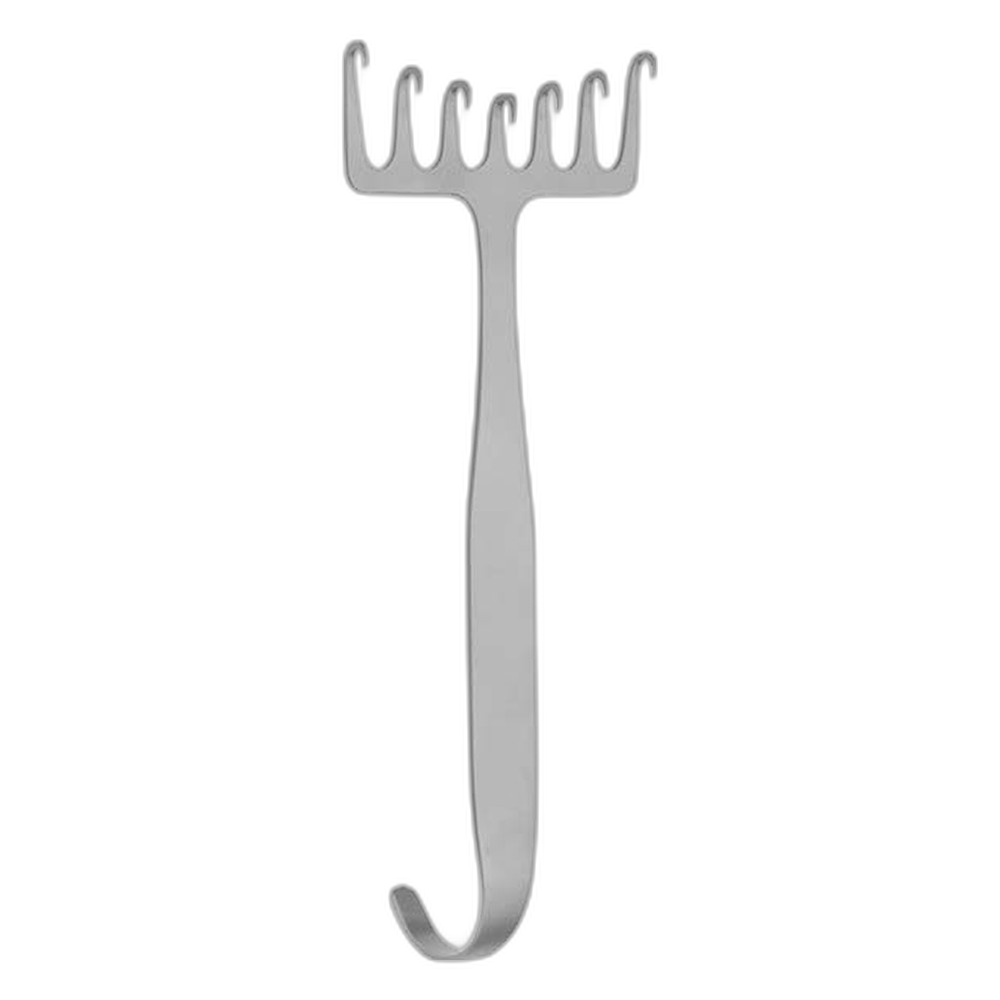
The set is rounded out with standard soft-tissue instruments scaled for the patient: fine tissue forceps, Metzenbaum and Mayo scissors, Gelpi or Weitlaner self-retaining retractors to hold the approach open, and towel clamps. The retractor choice matters in deep limb approaches where a hand-held retractor would tie up an assistant for the whole procedure.
Pins, wires, and the cerclage set
Not every fracture gets a plate. Intramedullary pins (Steinmann pins, Kirschner wires) provide axial alignment and are often combined with a plate or an external fixator. The instruments here are a pin chuck (Jacobs chuck) or a low-speed power driver, a wire cutter heavy enough to cut hardened pins cleanly, and — for cerclage — wire twisters and a wire tightener.
Cerclage wire reconstructs long oblique or spiral fractures. The technique is exacting: loose or improperly twisted wire loosens further with movement and becomes a nidus for problems, so a proper wire tightener that applies tension before the twist is not optional. Heavy pin cutters must be reserved for cutting and never used as levers, which chips the hardened edges.
External fixation instruments
For open or heavily contaminated fractures, external skeletal fixation keeps hardware out of the fracture zone. The instrument set adds a drill and drill guide for placing transfixation (Schanz) pins, connecting-bar clamps, and the wrenches that lock the frame. The advantage is that soft tissue can be managed while the frame maintains alignment — valuable in the degloving injuries common after vehicular trauma.
Materials, sterilization, and set management
Veterinary orthopedic instruments and implants are made from surgical stainless steel — commonly 316L for implants — and titanium where a lighter, more biocompatible construct is wanted. Cutting and holding instruments are hardened martensitic stainless. The mix of materials matters at reprocessing time: mixing dissimilar metals in a wet tray invites galvanic staining, so implants and instruments should be dried before storage.
Cannulated instruments, drill guides, and the internal channels of a pin chuck must be flushed and brush-cleaned; retained blood and bone debris survive a sterilization cycle and become a contamination source. Orthopedic sets are typically housed in an aluminum sterilization case with a silicone mat that holds each instrument and implant in an assigned slot — which doubles as an intra-operative inventory check, because a missing drill bit is discovered before the patient is draped, not during the drilling.
A working small-animal orthopedic kit is a substantial investment built around a matched implant system, precise drilling and measuring instruments, secure bone-holding forceps, and clean soft-tissue exposure. Fizza Surgical manufactures veterinary orthopedic instruments and general surgical instruments under ISO 13485 and CE marking, in 316L and martensitic stainless grades. Explore the range in our veterinary instruments and bone surgery instruments categories, and review our certifications for the standards behind each piece.
Frequently Asked Questions
What plate size is used most in small-animal fracture repair?
The 3.5 mm plate and screw system is the most commonly used in small-animal orthopedics, suiting medium to large dogs (roughly 15–40 kg) for femur, tibia, and humerus fractures. The 2.0 and 2.7 mm systems cover small dogs, and 1.5/2.0 mm systems are used for cats and toy breeds.
What is the difference between a neutral and a load drill guide?
A neutral guide centers the drill bit in the plate hole. A load (eccentric) guide offsets the bit toward the fracture so that tightening the screw compresses the fracture line. Using the wrong one places the compression in the wrong direction, so the two must not be confused.
Do locking screws need to be tapped first?
Usually not. Most locking screws are self-tapping and are placed through a threaded drill guide that keeps them perpendicular to the plate. Non-locking cortical screws in dense diaphyseal bone are typically pre-tapped with a matched tap.
What material are veterinary orthopedic implants made from?
Implants are commonly 316L surgical stainless steel, with titanium used where a lighter, highly biocompatible construct is preferred. Cutting and bone-holding instruments are made from hardened martensitic stainless steel.
Why must cannulated orthopedic instruments be flushed after use?
Blood, marrow, and bone debris lodge inside the channels of drill guides, cannulated instruments, and pin chucks. Sterilization does not remove organic debris, so retained material survives the cycle and becomes a contamination and corrosion source. These lumens must be brushed and flushed before autoclaving.
Need precision surgical instruments?
Configure complete instrument sets with our team — ISO 13485 certified, CE marked, made in Sialkot since 1980.
Related Guides
View all articles →
Where We Serve
Fizza Surgical exports to 50+ countries. Browse our country-specific pages with local regulatory guidance and pricing: