Mixter Forceps: The Right-Angle Clamp for Dissection & Ligation
Mixter forceps guide: how the right-angle clamp dissects behind vessels and passes ligatures in deep fields, plus sizes, jaw patterns and care.
 Made in Sialkot · Since 1980
How do you pass a tie behind a vessel you can barely see, deep in the chest or the porta hepatis? You reach for the instrument whose jaws turn the corner for you.
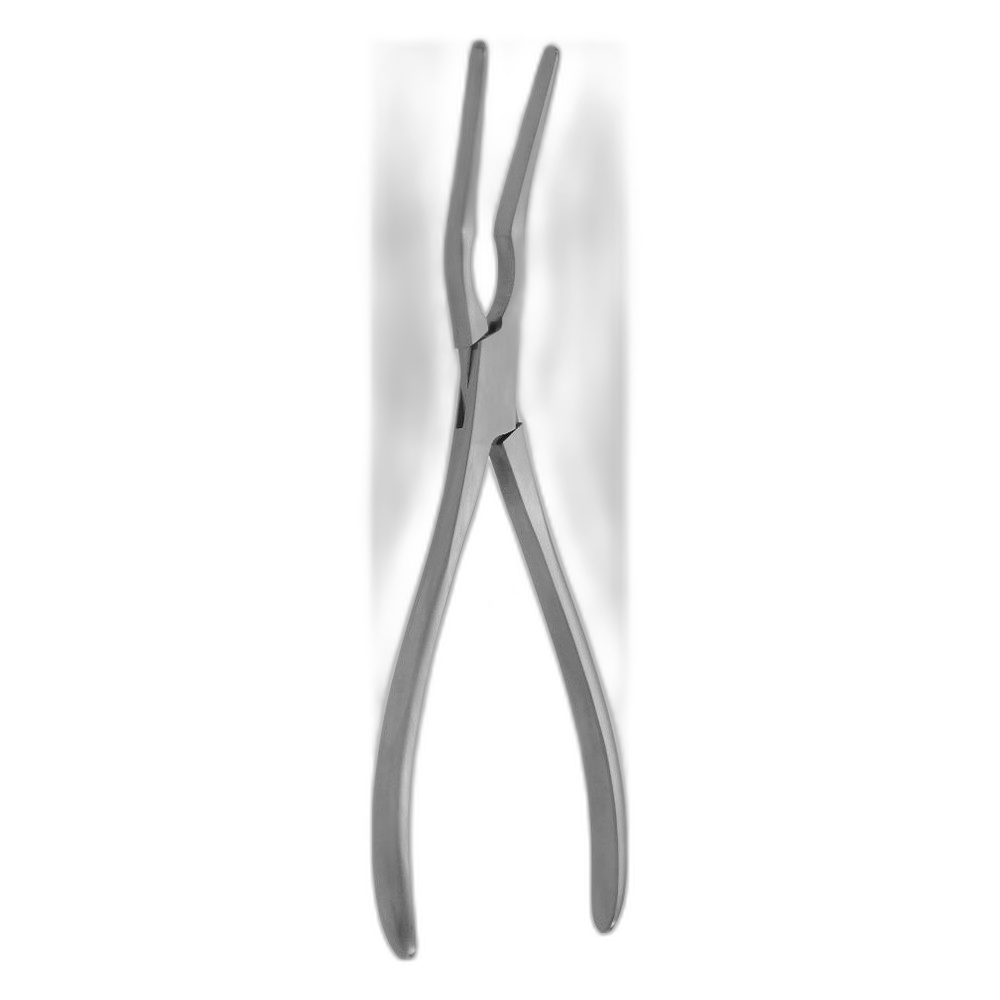
The Mixter is a right-angle forceps — its jaws bend roughly 90 degrees away from the shaft. That single geometric trick is what makes it indispensable for working around the back of structures the surgeon cannot get a straight clamp behind.
Why the Right Angle Matters
A straight clamp can only approach tissue head-on. In a deep, narrow field that is a real limitation: vessels and ducts sit against the floor of the cavity, and the surgeon needs to slide an instrument under and behind them. The angled jaw does exactly that. The tip travels around the far side of the structure while the surgeon’s hand stays clear of the field.
That ability serves two jobs in one instrument:
- Blunt dissection. The closed angled tip is pushed gently behind a vessel and opened, splitting the loose connective tissue plane to free the structure circumferentially.
- Passing a ligature. Once the vessel is freed, the open jaw grasps a suture and draws it back around — the “pass a tie” maneuver that defines the instrument.
Surgeons sometimes call it a “right angle” on the table rather than by name, and ask the scrub to “load it” when they want a tie held in the jaw, ready to pull around.
Jaw Patterns and Sizes
The Mixter is fully serrated along the angled jaw to grip suture and tissue without crushing. It is offered in a range of lengths and a few tip styles.
| Length | Typical Use |
|---|---|
| 18 cm (7 in) | Superficial vessels, neck and limb dissection |
| 20–23 cm (8–9 in) | General abdominal and pelvic ligation |
| 24–28 cm (9.5–11 in) | Deep thoracic and hepatobiliary work |
Longer patterns dominate in thoracic surgery, where the working point may be many centimetres below the surgeon’s hand. For the surrounding tray in chest work, see our thoracotomy instrument set guide. The fine, delicate tip variants overlap with dedicated gall-duct and dissecting forceps used in biliary procedures.
Where the Mixter Earns Its Place
It shows up across general, vascular, thoracic and gastrointestinal surgery. A few representative moments:
- Isolating and ligating the cystic artery and duct in a cholecystectomy
- Passing ties around vessels during a lung resection
- Mobilising vessels in vascular access work, such as creating an AV fistula for dialysis
- Dissecting around the ureter or major pelvic vessels
Materials and Care
The Mixter’s value lives in its tip. The angled jaw is slender, so the steel must be hard enough to keep the tips meeting precisely — misaligned tips will not hold a suture, and a dropped tie at depth is a real problem. We forge ours from hardened AISI 410/420 stainless and passivate every unit for corrosion resistance.
Three habits protect the instrument:
- Inspect tip apposition at every reprocessing cycle — hold the closed jaw to a light and check the tips meet with no gap.
- Never use it to clamp heavy tissue or needles. The slender angled jaw bends; it is a dissecting and ligature instrument, not a crushing clamp.
- Lubricate the box lock with steam-permeable instrument milk after cleaning so the joint stays smooth.
Browse the full surgical instruments range for the available Mixter lengths and patterns, or request a configured dissecting-forceps set.
Who Was Mixter? A Note on the Name
The instrument carries the name of Samuel Jason Mixter, a Boston surgeon of the early twentieth century whose right-angle clamp became the standard for working around deep vessels. The pattern proved so useful that “a Mixter” entered the operating-room vocabulary as shorthand for any fine right-angle forceps, regardless of maker.
Right-Angle Forceps: Mixter and Its Relatives
Several right-angle instruments share the same turned-corner concept but differ in tip fineness and intended depth. Knowing the family prevents the common mix-up at the back table.
| Instrument | Tip Character | Best Suited To |
|---|---|---|
| Mixter | Fine, fully serrated angled jaw | General dissection and passing ties |
| Lahey (gall duct) | Delicate, finely tipped | Biliary and ductal dissection |
| O’Shaughnessy | Long, slender right angle | Deep thoracic and cardiac vessels |
| “Baby” Mixter | Short, fine angled jaw | Pediatric and shallow fields |
The choice usually comes down to two questions: how deep is the structure, and how delicate is the tissue around it. A long O’Shaughnessy reaches a pulmonary vessel a straight clamp never could; a baby Mixter handles a neonatal field where a full-length jaw would obscure the view.
Common Errors With a Right-Angle Clamp
The Mixter rewards a light hand and punishes a heavy one. Three mistakes account for most ruined instruments and dropped ties:
- Forcing the tip through tissue instead of finding the plane. The angled jaw is meant to follow a natural connective-tissue plane behind a vessel. Driving it through tissue tears the vessel and bends the slender tip.
- Over-spreading the jaws. Opening the angled jaw too wide during dissection strains the box lock and can spring the joint, after which the tips no longer meet to hold a suture.
- Using it as a clamp. The Mixter dissects and passes ties; it is not a hemostat for heavy pedicles. Crushing thick tissue in a fine angled jaw is the fastest way to misalign the tips.
A clamp that has lost tip apposition cannot grasp a fine suture at depth — and a tie dropped behind a deep vessel is exactly the situation the instrument was bought to avoid. Routine tip inspection at reprocessing catches the problem before it reaches the field.
Loading a Tie: The Scrub-Surgeon Handoff
Half the value of a right-angle clamp depends on how it is handed over. When a surgeon calls for a “loaded” Mixter, the scrub places a length of suture into the open angled jaw so the surgeon can pass it around a vessel in one smooth move without looking away from the field. A few practical points make that handoff reliable:
- Seat the suture near the tip, not the heel. A tie held at the jaw tip pulls around a vessel cleanly; one held deep in the jaw drags and can slip.
- Leave a working tail. Enough suture should protrude on each side that the surgeon can grasp both ends once the tie is around the vessel.
- Pass the instrument ready to use. The clamp is handed with the ratchet open and the curve oriented the way the surgeon will work, so no time is lost reorienting it at depth.
This is where the instrument’s tip apposition matters most: a jaw that no longer meets precisely will drop the suture mid-pass, in the one position — deep behind a vessel — where a dropped tie is hardest to recover. It is the practical reason the tip inspection above is not optional.
Frequently Asked Questions
What are Mixter forceps used for?
For blunt dissection behind vessels and ducts in deep fields, and for passing ligatures around those structures once freed. The right-angle jaw lets the tip travel around the far side of a vessel that a straight clamp cannot reach.
What is the difference between a Mixter and a standard hemostat?
A standard hemostat has straight or gently curved jaws for head-on clamping. The Mixter’s jaw bends about 90 degrees, which is what allows it to dissect around and pass ties behind structures in confined spaces.
What length Mixter forceps should I choose?
Match the length to field depth: 18 cm for superficial work, 20–23 cm for general abdominal and pelvic ligation, and 24–28 cm for deep thoracic and hepatobiliary procedures.
Can Mixter forceps be used to clamp tissue?
Only lightly. The slender angled jaw is built for dissection and passing sutures, not crushing. Using it on heavy tissue or needles bends the tip and ruins the precise apposition it depends on.
Need precision surgical instruments?
Configure complete instrument sets with our team — ISO 13485 certified, CE marked, made in Sialkot since 1980.
Related Guides
View all articles →
Where We Serve
Fizza Surgical exports to 50+ countries. Browse our country-specific pages with local regulatory guidance and pricing: