Bone Impactors, Tamps and Mallets: Force Control in Orthopaedics
Choosing a bone impactor, tamp and mallet: matching mallet mass to tip size, cross-serration, graft impaction and the mushrooming discard rule.
Mallet mass, striking-face material, tamp tip diameter, tip serration pattern. Four variables, and getting any one of them wrong turns a controlled impaction into a split cortex or a fractured graft bed.
A bone impactor is the crudest-looking thing in an orthopaedic tray and the one most dependent on matched pairing. A 32 oz mallet on a 4 mm tamp is not “extra force available if needed” — it is an instrument combination that cannot be modulated by the surgeon’s hand fast enough to stop before the bone gives.
Matching Mallet Mass to the Task
Force delivered is a product of head mass and swing velocity. Because velocity is hard to control finely under drapes, the practical control variable is mass. The standard range and its uses:
| Mallet head weight | Approx. metric | Typical application |
|---|---|---|
| 7 oz | ~200 g | Hand, foot, maxillofacial; small osteotomes and fine tamps |
| 11 oz | ~310 g | Small-fragment work, dental and craniofacial grafting |
| 16 oz | ~450 g | General orthopaedic; tibial plateau elevation, cancellous impaction |
| 24 oz | ~680 g | Arthroplasty broaching, femoral impaction grafting |
| 32 oz | ~900 g | Heavy revision arthroplasty, acetabular reaming and cup seating |
The pairing convention worth teaching juniors: small pattern tamps take the 7–11 oz mallets, general orthopaedic tamps take the 16 oz, and only broaches and cup impactors see the 24 oz and above. A mallet that is too light is inefficient but safe; a mallet that is too heavy is efficient and dangerous.
Striking Face Material
Solid stainless steel heads transmit the most energy and are the default for osteotomes and chisels. Nylon or UHMWPE-faced mallets absorb some energy but protect the striking surface of an implant or an instrument with a polished finish — the reason arthroplasty sets carry a nylon-faced mallet alongside the steel one.
Lead-filled or shot-filled mallets deserve a mention because they behave differently: the internal mass shifts on impact, damping rebound. Surgeons who work with them report better control on repeated light strikes. They are heavier for a given head size and cannot be autoclaved indefinitely without the filling settling, so inspect them more often.
Tamps: Tip Geometry Is the Instrument
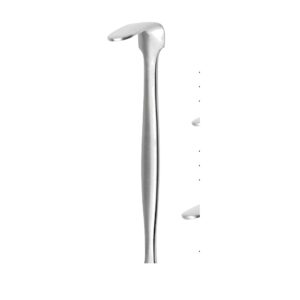
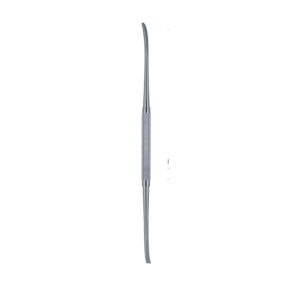
A tamp is a shaft with a flat working end used to compact, seat or elevate bone. What separates a good one from a bad one is entirely at the tip.
Cross-serration is the defining feature. A smooth-faced tamp skids sideways off a sloped cancellous surface at the moment of impact — precisely when the surgeon has least control. A cross-hatched face bites and holds. Serration depth of around 0.3 mm is the usual compromise: deep enough to grip, shallow enough to clean.
Tip diameter typically ranges from 4 mm to 20 mm in a full set. The rule is to select the largest tip that fits the defect, because a small tip concentrates force and punches through the subchondral plate instead of elevating it. Elevating a depressed tibial plateau segment through a cortical window is the classic case: a 15 mm tamp raises the whole articular fragment, a 6 mm tamp pushes a hole through it.
Shaft taper matters for access. A slender tapered shaft reaches through a cortical window or a metaphyseal corridor; a parallel heavy shaft is stiffer and better for straight-line impaction grafting down a femoral canal.
Impactors in Graft Work
Impaction grafting is where these instruments earn their place. In revision hip arthroplasty with femoral bone loss, morsellised allograft is packed into the canal over a guidewire and occlusion plug, then compacted with progressively larger cannulated tamps until the graft behaves as a solid neo-canal wall. Acetabular impaction grafting follows the same principle with hemispherical impactors sized to the reamed cavity.
The instrument requirement here is dimensional rather than mechanical: the tamp series must step in increments small enough that each pass compacts rather than displaces the previous layer. Gaps in a set — a missing intermediate size — are a real clinical problem, not a cosmetic one.
The same logic scales down to dental and maxillofacial work, where a bone impactor of 3–6 mm compacts particulate graft into a ridge augmentation site. Our dental bone grafting instruments guide covers that end of the range in detail.
The Inspection Criterion Nobody Applies
Mushrooming of the struck end is a discard criterion, not a cosmetic complaint.
Repeated impact work-hardens and spreads the proximal end of a tamp, osteotome or bone impactor into a flared lip. That lip eventually becomes brittle and can shed a metal fragment into the wound on a subsequent strike. It is a genuine retained-foreign-body mechanism and it is entirely preventable by inspection.
The check: run a gloved finger around the struck end. Any raised lip or overhang means the instrument goes for re-dressing on a grinder or is retired. Instruments with a hardened, slightly domed striking platform mushroom far more slowly than plain bar stock, which is one of the few places where paying more for the instrument genuinely returns the money.
Also check that the shaft is straight. A bent tamp delivers force off-axis, and a bent impactor in an arthroplasty set can seat a component in malalignment without the surgeon perceiving anything unusual through the mallet.
Materials
Impaction instruments take a martensitic stainless steel — typically AISI 420 — hardened at the striking end so the platform resists deformation, with the working tip left slightly less hard so serrations do not chip. Fully hardened bar stock throughout is a false economy: it mushrooms slowly but the serrated tip fractures.
Mallet heads are commonly AISI 304 or 316L where corrosion resistance dominates and mass is achieved through bulk rather than hardness. Handles need a knurled or textured grip that stays secure with blood and irrigation fluid on the glove; a polished round handle is a dropped instrument waiting to happen.
Our impaction instruments are manufactured under ISO 13485:2016 with CE marking, from ISO 7153-1 compliant steel. See our certifications page for current scope, or browse the full bone surgery instruments range.
These instruments pair directly with the reduction hardware covered in our bone hooks and reduction levers guide and with the osteotomes and chisels that share the same mallets.
Frequently Asked Questions
What weight mallet should a general orthopaedic tray carry?
A 16 oz steel-faced mallet covers most general trauma work — cancellous impaction, osteotome use, tibial plateau elevation. Add a 7 oz for hand and foot sets and a 24 oz only if the tray is used for arthroplasty broaching. Carrying three weights in one general tray is usually over-provisioning; two is enough.
Why do tamps have cross-serrated tips instead of smooth ones?
To stop the tip skidding laterally off a sloped or wet cancellous surface at the instant of impact. A smooth face slips, and a slip during impaction can shear an articular fragment or drive the instrument into surrounding soft tissue. The cross-hatch pattern bites into bone and holds the trajectory the surgeon set.
When does a mushroomed instrument need to be retired?
As soon as a raised lip or overhang is palpable at the struck end. The flared metal work-hardens and becomes brittle, and can shed a fragment into the wound on a later strike. Some flaring can be dressed back on a grinder by a competent instrument repair service; once the overall length or the striking platform geometry has changed materially, replace the instrument.
Can nylon-faced mallets be steam sterilised?
Yes, at standard 134 °C cycles, provided the face material is a validated medical-grade nylon or UHMWPE. What they do not tolerate well is repeated dry-heat sterilisation, which embrittles the polymer. Inspect the face for cracking or separation from the head at each reprocessing cycle; a delaminating face can release polymer debris into the wound.
For individual tamp sizes, complete impaction sets or mallet configurations to your own specification, contact our technical team for pricing and lead times.
Need precision surgical instruments?
Configure complete instrument sets with our team — ISO 13485 certified, CE marked, made in Sialkot since 1980.
Related Guides
View all articles →

Where We Serve
Fizza Surgical exports to 50+ countries. Browse our country-specific pages with local regulatory guidance and pricing: