Low-Temperature Sterilization: EtO vs Hydrogen Peroxide
Compare ethylene oxide and hydrogen peroxide sterilization: cycle times, lumen limits, packaging rules, indicators and when to use each.
Steam sterilisation works on roughly ninety percent of what passes through a hospital CSSD. The other ten percent is the problem — and it is the expensive ten percent.
Flexible endoscopes. Camera heads. Powered handpieces with sealed bearings. Battery housings. Polymer-bodied laparoscopic instruments. Anything with an electronic component, an adhesive bond, or a plastic that deforms above 60°C. These devices cannot see 134°C, and they still have to be sterile before the next case.
That is what low temperature sterilization exists to solve, and the choice between the available methods has real cost and throughput consequences.
The Three Methods in Practice
Three technologies dominate hospital installations: ethylene oxide gas, hydrogen peroxide gas plasma, and hydrogen peroxide vapour. Ozone and peracetic acid systems exist and occupy niches.
| Parameter | Ethylene oxide (EtO) | H₂O₂ gas plasma | H₂O₂ vapour |
|---|---|---|---|
| Process temperature | 37–55°C | < 57°C | 30–50°C |
| Exposure time | 60–180 min | 18–75 min | 25–60 min |
| Aeration required | 8–12 h (often longer) | None | None |
| Total cycle to release | 10–16 h typical | 30–90 min | 35–70 min |
| Lumen penetration | Excellent | Limited | Limited to moderate |
| Packaging | Paper/plastic, EtO-rated | Tyvek and polypropylene only | Tyvek and polypropylene only |
| Cellulose compatible | Yes | No — absorbs H₂O₂, cycle aborts | No |
| Residuals | Toxic; requires aeration | Water and oxygen | Water and oxygen |
| Occupational hazard | Carcinogen; monitoring mandated | Irritant; contained | Irritant; contained |
Ethylene oxide
EtO is the most penetrating option available and the most operationally painful. It alkylates microbial DNA, works at body temperature, and reaches into long narrow lumens that peroxide systems cannot service. For a 3 m flexible endoscope channel or a device with a complex internal geometry, it may be the only validated option the manufacturer will endorse.
The cost is time and regulation. Aeration is not optional — residual EtO and its by-products ethylene chlorohydrin and ethylene glycol are toxic, and the aeration phase dominates the cycle. Turnaround measured in a working day means duplicate inventory for anything used more than once daily.
Occupational exposure limits are tightly regulated in most jurisdictions, and environmental regulators have progressively restricted EtO emissions. Several health systems have decommissioned EtO entirely on that basis.
Hydrogen peroxide gas plasma
Vaporised hydrogen peroxide is diffused into an evacuated chamber, then an RF field generates a plasma that produces free radicals and, at cycle end, breaks the peroxide down into water vapour and oxygen. No aeration, no toxic residual, and turnaround inside an hour.
The limits are material and geometric. Cellulose absorbs hydrogen peroxide, so paper wraps, cotton, gauze and linen cannot enter the chamber — Tyvek and polypropylene only. Lumen penetration is restricted, with each system specifying validated minimum diameter and maximum length combinations. Exceed them and the device is not sterile, whether or not the cycle completes.
Hydrogen peroxide vapour
Similar chemistry without the plasma phase, generally with shorter cycles and, in some systems, improved lumen claims. Material restrictions are broadly the same.
Choosing a Method
The decision follows from the device inventory, not from a general preference.
Start with the manufacturer’s IFU. This is not advisory. A device sterilised by a method its manufacturer has not validated is off-label, and it is the first thing an inspector or a litigator examines. If the IFU names EtO only, peroxide is not an option regardless of what your CSSD prefers.
Then check lumens. Every peroxide system publishes validated lumen dimensions — typically expressed as a minimum internal diameter at a maximum length, with separate claims for single-channel and multi-channel devices. Measure the actual device. A lumen slightly outside the claim is outside the claim.
Then check materials. Cellulose in any form disqualifies a load from peroxide processing. This catches out departments that habitually use paper-based count sheets or absorbent tray liners.
Then look at throughput economics. EtO’s long cycle forces inventory duplication. Ten instrument sets on a 12-hour turnaround do less daily work than four sets on a 45-minute one. That inventory cost frequently exceeds the capital difference between the two systems.
Load Monitoring and Release
Low temperature cycles are monitored to the same principle as steam, with different biological indicators.
EtO cycles use Bacillus atrophaeus spores. Peroxide systems use Geobacillus stearothermophilus, the same organism as steam. Every load containing an implantable device should carry a biological indicator and be quarantined until the result reads out — modern rapid-readout BIs report in 20 to 60 minutes, which for peroxide cycles is a realistic hold.
Chemical indicators go inside every pack and on every outer wrap. Class 1 process indicators on the outside confirm exposure, not sterility; internal indicators of the appropriate class confirm the conditions inside the pack. Our guide to chemical and biological indicators covers the classification in detail.
Cycle-abort behaviour is worth training for specifically. Peroxide systems abort when they detect absorbent material or excess moisture in the load. An aborted cycle is a wet, peroxide-contaminated load that has to be fully reprocessed — not re-run. Staff who re-run aborted loads without reprocessing are the most common source of low-temperature sterility failures.
The Standards That Govern Each Process
Validation is not optional and the applicable standards differ by method — a point that catches out departments assuming one sterilisation policy covers everything.
| Standard | Scope |
|---|---|
| ISO 11135 | Ethylene oxide — development, validation and routine control |
| ISO 10993-7 | EtO residual limits on the finished device |
| ISO 22441 | Vaporised hydrogen peroxide — validation and routine control |
| ISO 14937 | General requirements for any sterilising agent |
| ISO 11138 series | Biological indicators, by method |
| ISO 11140 series | Chemical indicators and their classification |
| ISO 11607 | Packaging for terminally sterilised devices |
ISO 22441 is the more recent addition and worth flagging, because vaporised hydrogen peroxide processes were for years validated under the general framework of ISO 14937 rather than a method-specific standard. Departments with older validation files should confirm which basis theirs rests on.
For manufacturers, the relevant overlay is EU MDR and the quality system requirements of ISO 13485 — covered in our EU MDR compliance guide.
Cost Per Cycle and Capacity Planning
The purchase price of the sterilizer is rarely the deciding number. Three others matter more.
Consumable cost per cycle. Peroxide cartridges are a recurring per-cycle cost with no substitute source — you buy them from the sterilizer manufacturer. EtO cartridges are similarly proprietary. Model this over a five-year horizon at your realistic cycle count, not the vendor’s illustrative figure.
Chamber capacity against cycle time. A small chamber running 45-minute cycles processes more in a day than a large chamber running 14-hour EtO cycles, even at a fraction of the volume per load. Daily throughput, not chamber litres, is the planning unit.
Inventory duplication. This is the hidden cost that usually dominates. If a device is needed on consecutive lists and its turnaround is twelve hours, you must own a second one. For a flexible endoscope or a powered handpiece, that single duplication can exceed the annual consumable spend on a peroxide system.
Departments that run the arithmetic honestly usually land on peroxide for the bulk of the low-temperature load, with EtO retained only for the specific devices whose IFU permits nothing else — or outsourced to a contract sterilisation provider for those few items.
Packaging Requirements
The packaging rules are stricter than most CSSD teams expect, and they are the leading cause of aborted cycles.
- Peroxide systems: Tyvek pouches and polypropylene wrap only. No paper, no cotton, no cellulose-based tray liners, no gauze, no cardboard.
- EtO: Paper/plastic pouches rated for EtO, or standard wrap. Cellulose is permitted and normal.
- Rigid containers: Must be validated for the specific method. A steam container is not automatically a peroxide container — filter media and gasket materials differ.
- Load density: Peroxide diffusion is more sensitive to crowding than steam. Overloaded chambers produce non-sterile centres.
Broader packaging principles are covered in our sterile packaging guide.
What This Means for Reusable Steel Instruments
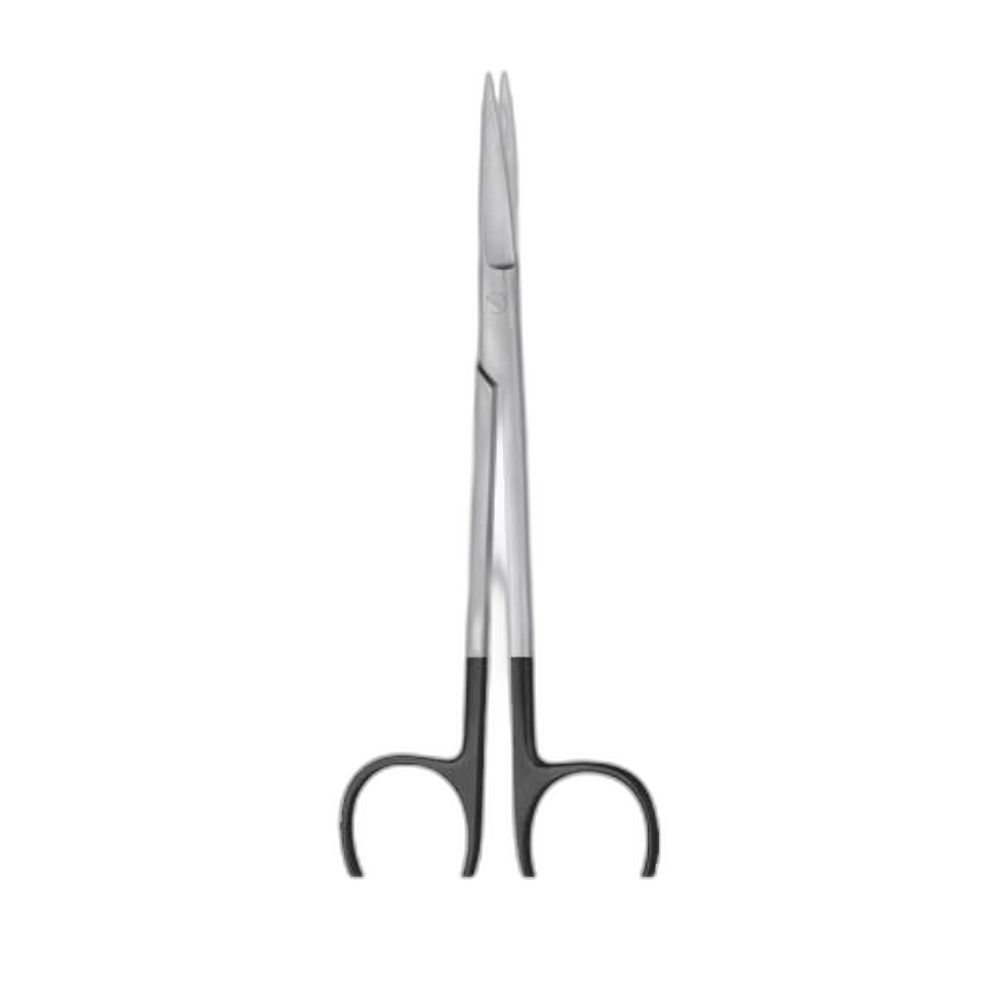
Worth stating plainly, because it drives unnecessary cost: conventional stainless steel surgical instruments do not need low-temperature processing. Forceps, scissors, retractors, needle holders, clamps and rongeurs manufactured from AISI 410, 420 or 316L are designed for repeated 134°C steam cycles and are more reliably sterilised by steam than by any gas method.
Steam penetrates hinges and box joints. It leaves no residual. It costs a fraction as much per cycle. Routing steel instruments through peroxide because a set happens to contain one heat-sensitive component wastes capacity and, over time, is harder on the peroxide-incompatible components than steam would have been on the steel.
The correct approach is to split the set — steam the steel, low-temperature the heat-sensitive items, reunite at assembly. Departments that do this well recover meaningful peroxide chamber capacity. Our CSSD workflow guide covers the split-set routing in practice, and autoclave loading patterns covers the steam side.
Fizza Surgical manufactures fully autoclavable reusable instruments across the surgical, bone surgery and dental ranges, under ISO 13485 and CE marking — see our certifications.
Frequently Asked Questions
What temperature counts as low temperature sterilization?
Below approximately 60°C. Ethylene oxide runs 37–55°C, hydrogen peroxide gas plasma below 57°C, and peroxide vapour systems 30–50°C — all well beneath the 121–134°C of steam autoclaving.
Why can’t I use paper wrap in a hydrogen peroxide sterilizer?
Cellulose absorbs hydrogen peroxide. It depletes the sterilant concentration below the level required for a lethal cycle and typically triggers a cycle abort. Only Tyvek and polypropylene packaging are permitted.
Is ethylene oxide still used given the safety concerns?
Yes, where nothing else is validated — long narrow lumens and certain polymer devices. Its penetration is unmatched. But the toxic residuals, mandatory aeration, occupational exposure limits and tightening emissions regulation have pushed many health systems to eliminate it where an alternative exists.
Which biological indicator applies to each method?
Bacillus atrophaeus for ethylene oxide; Geobacillus stearothermophilus for hydrogen peroxide systems and for steam. Every implant-containing load should be quarantined pending the BI result.
Can stainless steel surgical instruments be processed at low temperature?
They can be, but there is no reason to. Steel instruments are designed for repeated 134°C steam cycles, which penetrate hinges and box joints better than gas methods, leave no residual and cost far less per cycle. Reserve low-temperature capacity for genuinely heat-sensitive devices.
What should I do with an aborted peroxide cycle?
Fully reprocess the load — do not simply re-run it. An aborted cycle leaves a wet, peroxide-contaminated load. Repackage after inspecting for the cause, which is usually cellulose contamination, residual moisture from inadequate drying, or chamber overloading.
Need precision surgical instruments?
Configure complete instrument sets with our team — ISO 13485 certified, CE marked, made in Sialkot since 1980.
Related Guides
View all articles →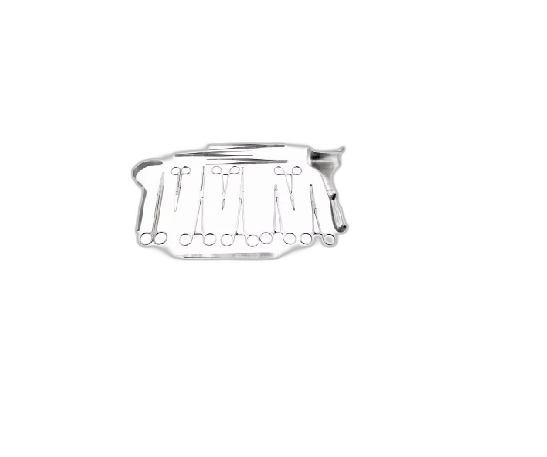
Where We Serve
Fizza Surgical exports to 50+ countries. Browse our country-specific pages with local regulatory guidance and pricing: