Pediatric Surgery Instrument Set: Neonatal & Infant Tools
Pediatric surgical instruments explained: neonatal to adolescent sizing, core tray list, 3mm infant laparoscopy and procedure-specific additions.
 Made in Sialkot · Since 1980
A 2.4 kg neonate with duodenal atresia gives you a working incision of roughly 3 cm. The liver edge sits high, the transverse colon is immediately under the wound, and the duodenum you need to reach is behind both. Hand the scrub nurse a standard adult Kelly clamp in that field and the jaws alone will obscure the anastomosis you are trying to build.
That is the whole argument for a dedicated pediatric tray, in one sentence.
Scaling matters more here than in almost any other specialty. A 5 mm bite of tissue is trivial in an adult colectomy and catastrophic in a neonatal bowel anastomosis. This guide covers what actually belongs in a set of pediatric surgical instruments, how sizing changes between neonates, infants and older children, and the specification details worth checking before you sign a purchase order.
Why Shrinking an Adult Tray Does Not Work
The instinct is to order the same instrument patterns in shorter lengths. It half-works, and the half that fails causes problems.
Length is the easy variable. What separates genuine pediatric surgical instruments from short adult ones is the relationship between jaw mass, spring tension and tip profile. A hemostat shortened from 5.5″ to 4″ without redesigning the box joint keeps its original closing force. Applied to a 1.5 mm mesenteric vessel in a preterm infant, that force crushes rather than occludes, and the vessel tears when the clamp comes off.
Three properties have to change together:
- Jaw profile — serration pitch drops from roughly 0.8 mm on adult patterns to 0.4–0.5 mm, so tissue is held rather than shredded
- Spring tension — the shank must be thinned so closing force falls proportionally, not just shortened
- Ratchet increments — finer teeth allow a first-click hold that is genuinely light
A tray assembled from correctly engineered patterns behaves predictably. One assembled from cut-down adult stock behaves like an adult tray with less reach, which is the worst of both.
Core Instrument List by Function
A working general pediatric set runs 60–90 pieces depending on whether thoracic and genitourinary work is included. The functional backbone is smaller than the piece count suggests.
| Function | Instrument | Typical Size | Notes |
|---|---|---|---|
| Sharp dissection | Metzenbaum scissors, curved | 11.5 cm (4.5″) | Fine blade taper; TC insert option for longevity |
| Heavy cutting | Mayo scissors, straight | 14 cm (5.5″) | Suture and fascia only |
| Tenotomy | Iris or Stevens scissors | 10–11 cm | Hernia sac, hydrocele, fine planes |
| Atraumatic grasp | DeBakey forceps | 10–15 cm, 1.5 mm jaw | Bowel and vessel handling |
| Skin grasp | Adson-Brown forceps | 12 cm, 7×7 teeth | Wide tissue spread, low crush |
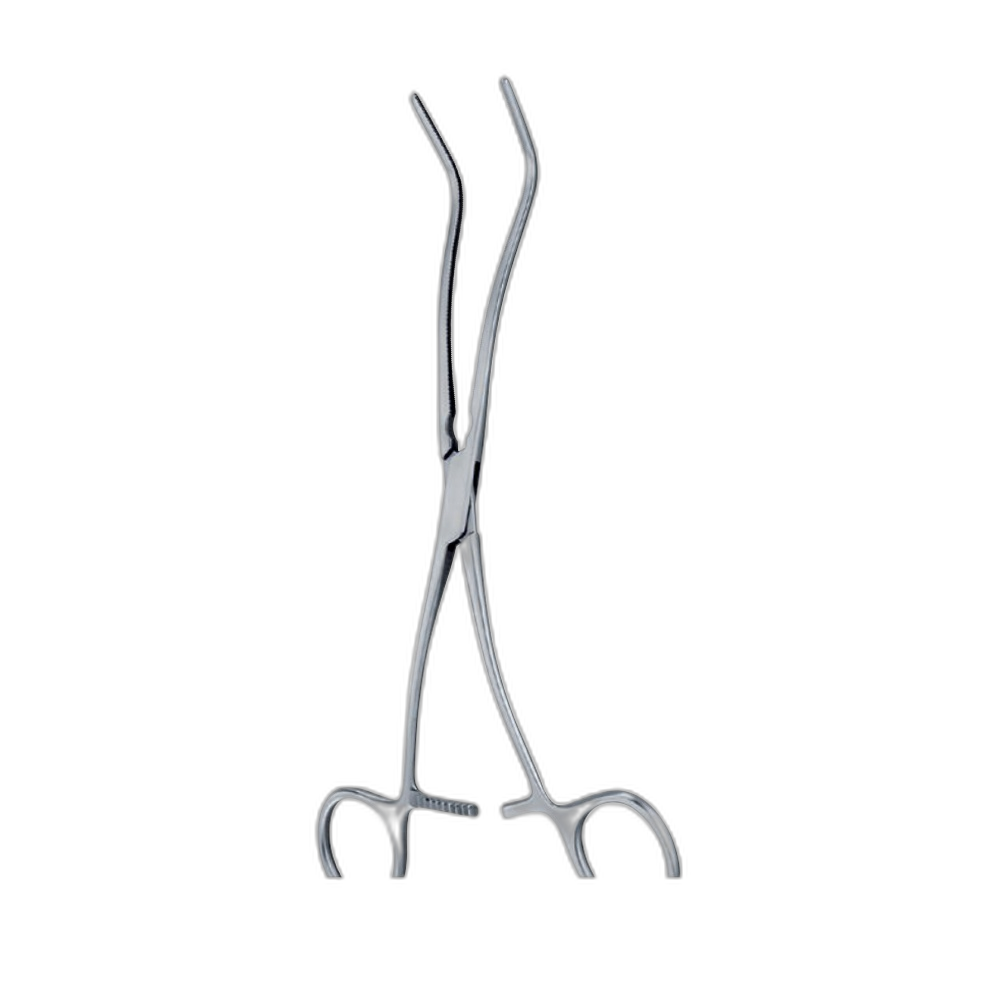
| Hemostasis | Micro mosquito, curved | 10 cm (4″) | Workhorse — 8 to 12 per tray |
| Right-angle | Baby Mixter / Lahey | 14 cm | Duct and vessel encirclement |
| Suturing | Crile-Wood needle holder | 12.5 cm (5″) | TC jaws for 5-0 and finer |
| Micro suturing | Castroviejo needle holder | 14 cm | Vascular access, urology |
| Handheld retraction | Senn, Ragnell, baby Deaver | 13–16 cm | Double-ended patterns save tray space |
| Self-retaining | Denis Browne ring retractor | Infant frame | Classic pediatric abdominal exposure |
| Self-retaining | Baby Balfour | Infant blades | Laparotomy in larger infants |
| Suction | Frazier tip | 6–8 Fr | Adult Yankauer is unusably large |
Two of these deserve comment. The Denis Browne ring remains in service decades after its introduction because a fixed ring with movable blades gives circumferential exposure without an assistant’s hand in a field that has no room for one. And the 6 Fr Frazier matters more than it looks: neonatal blood loss of 30 mL is a significant fraction of circulating volume, so suction that cannot be metered precisely is a safety problem, not a convenience one.
Sizing Across the Age Range
“Pediatric” spans a 50-fold weight range. Most departments run two or three trays rather than one.
| Group | Weight | Instrument Length | Retraction |
|---|---|---|---|
| Preterm / neonate | <3 kg | 10–12 cm | Denis Browne infant ring, Senn |
| Infant | 3–10 kg | 12–14 cm | Baby Balfour, small Deaver |
| Child | 10–30 kg | 14–16 cm | Small Balfour, Army-Navy |
| Adolescent | >30 kg | Adult patterns | Standard Balfour, Richardson |
The adolescent row is not a formality. Ordering a full “pediatric” inventory and then discovering that half your appendicectomies are on 45 kg teenagers who need adult-length instruments is a common and expensive procurement error. Buy against your actual case mix, not the department’s name.
Procedure-Specific Additions
The general tray covers most of the workload, but the high-volume pediatric operations each need one or two items that are not on it. Missing them mid-case is the usual reason a set gets described as incomplete.
| Procedure | Additions Required | Reason |
|---|---|---|
| Pyloromyotomy | Pyloric spreader (Benson), fine blade handle | Splits muscle without breaching mucosa |
| Inguinal hernia | Fine mosquitos, Ragnell retractors, tenotomy scissors | Sac dissection off cord structures |
| Orchidopexy | Fine DeBakey, vessel loops | Atraumatic handling of testicular vessels |
| PDA ligation | Baby Finochietto, fine right-angle, clip applier | Thoracic exposure and ductal control |
| Nissen fundoplication | Baby Babcock, liver retractor, hiatal dissectors | Fundal mobilisation and crural repair |
| Anorectal malformation | Nerve stimulator, fine skin hooks, Lone Star retractor | Sphincter identification and preservation |
| Bowel atresia | Fine bowel clamps, 6-0 and 7-0 needle holders | Anastomosis in 5–8 mm lumen |
The pyloric spreader is the clearest example of why a purpose-built instrument beats improvisation. Hypertrophic pyloric stenosis requires splitting a thickened muscle layer down to — but not through — a mucosa that is well under a millimetre thick. A spreader with controlled, parallel jaw opening does this predictably. A hemostat used as a substitute opens on an arc and perforates.
Similarly, bowel atresia anastomoses in a 5–8 mm lumen are done with 6-0 or 7-0 suture, which demands a needle holder with jaws fine enough to grip a needle that size without bending it. A standard 5″ Crile-Wood with TC jaws sized for 4-0 will crush a 7-0 needle. This is the single most common instrument mismatch in neonatal surgery.
Minimally Invasive Work in Small Cavities
Infant laparoscopy is a different constraint problem. The working space in a 5 kg infant is a few hundred millilitres at 8 mmHg insufflation — roughly a tenth of an adult’s at 14 mmHg.
Instrument diameter drops to 3 mm, and shaft length shortens to 20–25 cm rather than the 33 cm standard. Long shafts in a shallow cavity amplify tremor and push the surgeon’s hands into each other outside the patient. Ports sit closer together than the textbook 8 cm triangulation rule allows, so shorter shafts are what make the geometry survivable.
A functional 3 mm set covers Maryland dissector, atraumatic grasper, hook diathermy, curved scissors and a needle holder. Optics are usually a 5 mm 30° scope; 3 mm scopes exist but light transmission falls sharply and image quality suffers. Ports for neonates are frequently radially dilating or fixed with a screw thread, since a standard bladed trocar in a 1 mm abdominal wall gives no purchase and slides out with the instrument. Our guide to laparoscopic trocar types covers that trade-off in more depth, and the broader laparoscopic instrument set guide maps the adult baseline these sets scale down from.
Material and Finish Specification
Steel selection follows the same logic as adult instrumentation, with one amplification: the thinner the section, the less forgiving the material.
Cutting instruments use martensitic grades in the 420 family, hardened to 52–56 HRC so a 4.5″ Metzenbaum holds an edge through repeated reprocessing. Clamps, needle holders and forceps use 410 or 420 at lower hardness for toughness — a 10 cm mosquito with a hardened-brittle shank will snap at the box joint rather than flex. Retractors and holloware move to austenitic 316L for corrosion resistance where springiness is not required. Material requirements sit under ISO 7153-1; we cover the practical differences in the stainless steel grades guide.
Finish is worth specifying explicitly. A mirror polish reflects theatre lights straight back at the surgeon in a shallow neonatal field, which is genuinely distracting during microvascular work. Satin or matte finish is the usual request for pediatric and micro trays. Tungsten carbide inserts on needle holders and scissors extend service life considerably, and the gold ring handle makes the TC instruments identifiable at a glance during a count.
Tray Build, Counting and Reprocessing
Small instruments create two specific risks in central sterile supply.
The first is loss. A 10 cm mosquito is easy to miss in a drape fold, and pediatric counts are the same discipline as adult ones with less margin for error — see the instrument count procedure for the protocol. Stringering fine instruments and using bracketed inserts rather than loose trays cuts both loss and damage.
The second is cleaning access. A 0.4 mm serration pitch traps protein that a 0.8 mm pitch releases. Enzymatic soak times that suffice for a general tray are frequently inadequate for micro instruments, and ultrasonic cavitation intensity has to be moderated — the same energy that cleans a heavy rongeur will loosen fine box joints over time. The CSSD workflow guide sets out the full dirty-to-sterile sequence.
Practical points that reduce failures:
- Open every box joint and ratchet before soaking; closed instruments do not clean
- Inspect tips under magnification, not eyeballed — a 0.5 mm tip misalignment is invisible at arm’s length and ruins fine dissection
- Lubricate after every cycle; fine joints seize faster than heavy ones
- Segregate micro instruments from general trays during washing to prevent impact damage
What to Check Before You Buy
Specification sheets converge on the same claims. The differences show up under inspection.
Close a mosquito on a single sheet of tissue paper and hold it to the light — the jaws should mark evenly along their full length, with no gap at the tip and no crossover. Work the ratchet slowly and confirm the first tooth engages cleanly rather than slipping to the second. Check that scissor blades shear along their entire length by cutting a strip of thin latex from tip to hinge; blades that only cut at the base have poor set. Under magnification, box joints should be flush with no visible step, and laser markings should be crisp rather than smeared.
Certification matters for import: EU market access requires CE marking under EU MDR, and a quality system certified to ISO 13485. Fizza Surgical has manufactured in Sialkot since 1980 and holds both — details on our certifications page, with the full range in surgical instruments.
Frequently Asked Questions
How many pediatric surgical instruments should a basic general tray contain?
A functional general tray runs 60–90 pieces. The count is driven by hemostats — most sets carry 8 to 12 micro mosquitos, since they are the instrument in continuous use. Adding thoracic or genitourinary capability pushes the count past 100.
Can adult instruments be used on older children?
Yes, above roughly 30 kg. Adolescent patients generally need adult-length patterns, and forcing short instruments into a deep field costs exposure and control. Most departments keep an adult tray available alongside the pediatric ones for this reason.
What shaft length is correct for infant laparoscopy?
20–25 cm with 3 mm diameter. The standard 33 cm adult shaft is too long for a shallow cavity — it magnifies tremor and forces the surgeon’s hands together outside the patient.
Why specify a satin rather than mirror finish?
Mirror surfaces reflect overhead theatre lighting back into a shallow operative field. In neonatal and microvascular work that glare is a real distraction, so satin or matte finishes are standard on fine trays.
Do fine instruments need different sterilization parameters?
Cycle parameters are the same, but cleaning is not. Finer serrations retain protein more stubbornly, so enzymatic contact time should be extended and ultrasonic intensity moderated. Fine box joints also need lubrication after every cycle rather than periodically.
Sizing a pediatric inventory well comes down to matching instruments to the weight range you actually operate on, and inspecting jaw and joint quality rather than trusting a datasheet. Get those two right and the tray will serve for years.
Need precision surgical instruments?
Configure complete instrument sets with our team — ISO 13485 certified, CE marked, made in Sialkot since 1980.
Related Guides
View all articles →

Where We Serve
Fizza Surgical exports to 50+ countries. Browse our country-specific pages with local regulatory guidance and pricing: