Splenectomy Instrument Set: Spleen Surgery Complete Guide
Complete splenectomy instruments guide: laparotomy set, hilar clamps, retractors and vascular control for open trauma and elective spleen surgery.
 Made in Sialkot · Since 1980
A grade IV splenic laceration from a road traffic accident does not wait for anyone. The patient is hypotensive, the abdomen is distending, and the team has minutes — not hours — to get into the left upper quadrant, mobilise the spleen, and control the hilum. In that setting the instrument tray is not a checklist. It is the difference between a controlled splenectomy and a scramble for clamps that should already have been counted and laid out.
This guide walks through the full set of splenectomy instruments used in an open procedure, why each one earns its place on the Mayo stand, and how the tray shifts between an elective haematological case and a trauma laparotomy.
What an Open Splenectomy Tray Actually Contains
An open splenectomy is built on a standard major laparotomy set, then supplemented with instruments specific to mobilising a deep, friable, highly vascular organ tucked under the left costal margin. The spleen sits against the diaphragm, the stomach, the tail of the pancreas and the splenic flexure of the colon — so exposure and vascular control dominate the instrument selection.
The tray divides cleanly into five working groups: exposure, dissection, vascular control, haemostasis, and closure. Getting the count right in each group before the incision is what keeps the operation calm.
Exposure and Retraction
You cannot ligate what you cannot see. The splenic hilum is one of the deeper targets in abdominal surgery, and a shallow retractor set will fight you the entire case.
- Self-retaining abdominal retractor — a Balfour, Bookwalter or Omni-Tract system holds the wound open and frees the assistant’s hands. For a subcostal or midline approach to the spleen, the deep blades matter more than the wide ones.
- Deaver retractors — the long, curved blade slides medial to the spleen to sweep the stomach and colon out of the field. A pair of 2-inch and 3-inch Deavers covers most builds.
- Malleable (ribbon) retractors — bent to shape, they protect the diaphragm and pancreatic tail during blunt mobilisation.
- Army-Navy and Richardson retractors — for the superficial layers before the self-retaining system goes in.
The Balfour retractor and the deep-reaching Deaver are the two exposure instruments most surgeons name first when asked what they cannot operate without in this case.
Dissection Instruments
Mobilising the spleen means taking down the splenorenal, splenophrenic, splenocolic and gastrosplenic ligaments. Most of this is done with a mix of sharp and blunt dissection under direct vision.
- Metzenbaum scissors — curved, 18–23 cm, for sharp dissection of the avascular ligamentous attachments.
- Long DeBakey and Adson-Brown tissue forceps — atraumatic pickups that grip peritoneum and vessel adventitia without tearing.
- Right-angle (Mixter) forceps — indispensable for passing ties around the splenic artery and vein at the hilum.
- Electrocautery pencil with an extended tip — for the short gastric vessels and minor bleeders in the gastrosplenic ligament.
Vascular Control — the Heart of the Case
The splenic artery and vein are the two vessels that decide how the operation goes. The artery is often ligated first, near the upper border of the pancreas, to let the spleen decongest and shrink before the vein is taken.
- Heavy curved clamps (Rochester-Carmalt, Rochester-Pean) — for the pedicle and the short gastrics. The longitudinal serrations of the Rochester-Carmalt hold a bulky vascular pedicle without slipping.
- Right-angle Mixter clamps — to dissect behind and encircle the hilar vessels.
- Vascular clamps (DeBakey, Satinsky) — for partial-occlusion control when a splenorrhaphy or partial splenectomy is being attempted rather than a total removal. The choice between a straight and a tangential clamp is covered in our comparison of the DeBakey and Satinsky clamps.
- Ligation ties and suture ligatures — 2-0 and 0 silk or polyglactin for the pedicle; transfixion sutures for the arterial stump.
Haemostasis and Suction
A ruptured spleen fills a quadrant with blood fast. Suction is not optional — it is how the surgeon keeps a working view.
- Yankauer and Poole suction tips — the Poole’s guarded, multi-perforated tip is ideal for evacuating a large haemoperitoneum without clogging on omentum, while the Yankauer handles focused suctioning at the hilum. See our breakdown of the Yankauer versus Poole suction tips.
- Energy devices — bipolar cautery, an advanced bipolar sealer, or an ultrasonic scalpel seal the short gastric vessels efficiently in an elective case.
- Haemostatic agents and packs — laparotomy sponges to pack the splenic bed while the team gains control, plus topical haemostats for oozing raw surfaces.
Closure
Standard laparotomy closure applies: heavy needle holders (Mayo-Hegar or Crile-Wood), 1-0 or looped monofilament for the linea alba, and skin staplers or subcuticular suture for the skin. A well-organised needle holder selection speeds the fascial closure that ends a long case.
Trauma Splenectomy vs Elective Splenectomy: How the Tray Changes
The two situations demand different priorities from the same base set.
| Consideration | Trauma Splenectomy | Elective Splenectomy |
|---|---|---|
| Pace | Rapid mobilisation, immediate hilar control | Deliberate, vessel-by-vessel dissection |
| Key instruments | Heavy clamps, packs, Poole suction, ready pedicle clamp | Energy sealing devices, fine right-angle dissection, meticulous ties |
| Retraction | Manual Deaver + hand, then self-retaining once stable | Self-retaining system placed early |
| Spleen handling | May be delivered into the wound before control | Ligaments divided in situ |
| Common indication | Grade III–V laceration, haemodynamic instability | ITP, hereditary spherocytosis, lymphoma, splenomegaly |
In the elective haematological patient, splenomegaly changes everything — a spleen weighing over 1 kg needs longer instruments, stronger retraction, and often a hand-assisted approach. The trauma spleen is usually normal in size but surrounded by clot and instability.
Materials and Manufacturing Standards
Every reusable instrument on a splenectomy tray is manufactured from surgical-grade stainless steel — typically martensitic grades such as AISI 410 and 420 for cutting and clamping instruments, and austenitic 316L for components requiring maximum corrosion resistance. The martensitic grades take and hold an edge; the austenitic grades resist pitting through repeated autoclave cycles.
Instruments produced to ISO 7153-1 (the standard governing metallic materials for surgical instruments) and manufactured under an ISO 13485 quality system carry consistent hardness, correct box-lock alignment, and passivated surfaces that resist the rust and staining that plague poorly finished clamps. At Fizza Surgical we have forged instruments to these standards in Sialkot for over 40 years, and the vascular clamps on a splenectomy tray are exactly where that consistency shows — a box lock that binds mid-case is not a tolerable defect.
Specifications: Core Clamps on a Splenectomy Tray
| Instrument | Typical Length | Jaw Pattern | Primary Role |
|---|---|---|---|
| Rochester-Carmalt forceps | 20–25 cm | Longitudinal serrations, cross-hatched tip | Splenic pedicle, short gastrics |
| Mixter right-angle | 20–23 cm | Fully serrated, right-angled | Encircling hilar vessels |
| DeBakey vascular clamp | Various | Atraumatic DeBakey teeth | Partial vascular occlusion |
| Rochester-Pean | 16–20 cm | Transverse serrations | General heavy haemostasis |
| Metzenbaum scissors | 18–23 cm | Curved, blunt tips | Ligament dissection |
Sterilisation and Reprocessing Notes
Vascular clamps and right-angle forceps are among the harder instruments to clean because debris hides in the serrations and inside the box lock. After a bloody case, immediate point-of-use treatment with an enzymatic pre-soak stops proteinaceous soil from drying into the jaws. Ultrasonic cleaning followed by lubrication of the box locks keeps the ratchets working smoothly, and instruments should be autoclaved in the open (unlocked) position to avoid stress cracking at the joint. A complete splenectomy set is typically wrapped and steam-sterilised as a tray, with an internal chemical indicator confirming steam penetration to the centre.
Frequently Asked Questions
What is the most important instrument in a splenectomy set?
The hilar clamp — usually a Rochester-Carmalt or a right-angle Mixter — is the single most critical instrument, because control of the splenic artery and vein at the hilum is what stops the bleeding and defines the operation. Without a reliable pedicle clamp, no other instrument matters.
How does a laparoscopic splenectomy set differ from an open one?
A laparoscopic splenectomy relies on trocars, a 30-degree scope, laparoscopic graspers, an articulating vascular stapler for the hilum, and an endoscopic retrieval bag to morcellate and remove the spleen. The open set’s heavy clamps and self-retaining retractors are replaced by port-based instruments, though an open tray is always kept ready in case conversion is needed.
Why is the splenic artery ligated before the vein?
Ligating the artery first lets blood drain out of the spleen through the still-open vein, decongesting and shrinking the organ. This autotransfusion reduces its size, makes mobilisation easier, and returns a useful volume of blood to the circulation before the vein is divided.
What steel grade are splenectomy clamps made from?
Heavy vascular and pedicle clamps are typically forged from martensitic stainless steel such as AISI 410 or 420, which provides the hardness needed to hold a bulky pedicle without deforming. Instruments requiring maximum corrosion resistance may use austenitic 316L.
Can the same set be used for partial splenectomy or splenorrhaphy?
Yes, with additions. Spleen-preserving procedures need atraumatic vascular clamps (DeBakey or Satinsky) for partial occlusion, fine haemostatic sutures on the raw parenchyma, and topical haemostatic agents. The base laparotomy and exposure instruments remain the same.
Sourcing a Complete Splenectomy Set
A dependable splenectomy tray is less about exotic instruments and more about heavy clamps that grip, retractors that hold depth, and box locks that survive hundreds of cycles. Fizza Surgical manufactures the full range of laparotomy, vascular and general surgery instruments used in these sets, all produced under ISO 13485 and CE marking. Browse the complete surgical instruments range or review our certifications to confirm the standards behind every clamp on the tray.
Need precision surgical instruments?
Configure complete instrument sets with our team — ISO 13485 certified, CE marked, made in Sialkot since 1980.
Related Guides
View all articles →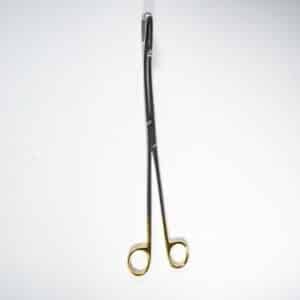

Where We Serve
Fizza Surgical exports to 50+ countries. Browse our country-specific pages with local regulatory guidance and pricing: