Wire Cerclage Instruments: Fracture Fixation Wire Technique Guide
Cerclage wire instruments explained: wire passer, tightener and cutter sizing, wire gauge, loops and technique for clean fracture fixation.
 Made in Sialkot · Since 1980
Cerclage — from the French for “to girdle” — is one of the oldest ideas in fracture surgery: encircle the bone with a wire loop, tension it, and hold the fragments together. The concept is simple. Doing it cleanly, without stripping the periosteum or leaving a loose loop that migrates, depends entirely on the instruments.
Wire cerclage is used two ways. As provisional fixation it holds a reduced fracture while screws, a plate, or an intramedullary nail go in, then the wire often comes out. As definitive fixation it supplements other constructs — classically around a long-bone spiral fracture or a periprosthetic fracture where screw purchase is poor. Either way, the technique is only as good as the wire passer, tensioner, and cutter in your hand.
The Three Instruments That Do the Work
Wire Passer
The wire passer carries the wire around the far side of the bone so it can be brought back to the surgeon without a wide soft-tissue dissection. It is a shaft with a curved end and an eyelet or notch that guides the wire around the shaft perpendicular to the long axis. The curved tip is threaded around the bone, the wire is fed into the eyelet, and the passer is withdrawn, pulling the wire into position.
Curvature is the key spec. Passers come in different radii — commonly around 45 mm and 70 mm — matched to the bone diameter. A femoral shaft needs a wider curve than a metacarpal or an olecranon. Using a passer whose curve does not match the bone forces the surgeon to lever against tissue, which is exactly the periosteal stripping cerclage is criticised for.
Wire Tightener / Tensioner
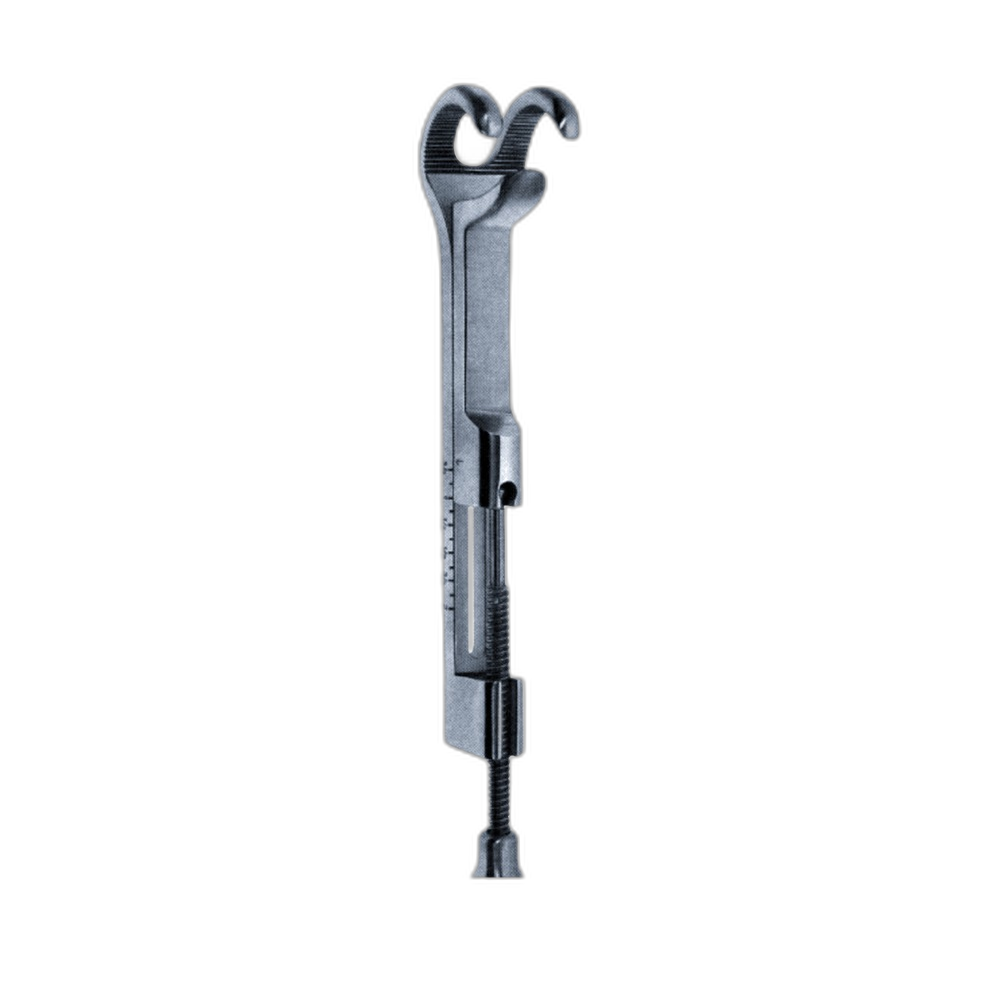
Once the wire encircles the bone, the two ends must be tensioned evenly and twisted or crimped. A dedicated wire tightener grips both ends, applies measured tension, and twists at the base so the knot sits flush against the bone. Doing this with a needle holder or heavy forceps — still common in improvised trays — gives uneven tension and a proud twist that irritates soft tissue and can back off under load.
Wire Cutter
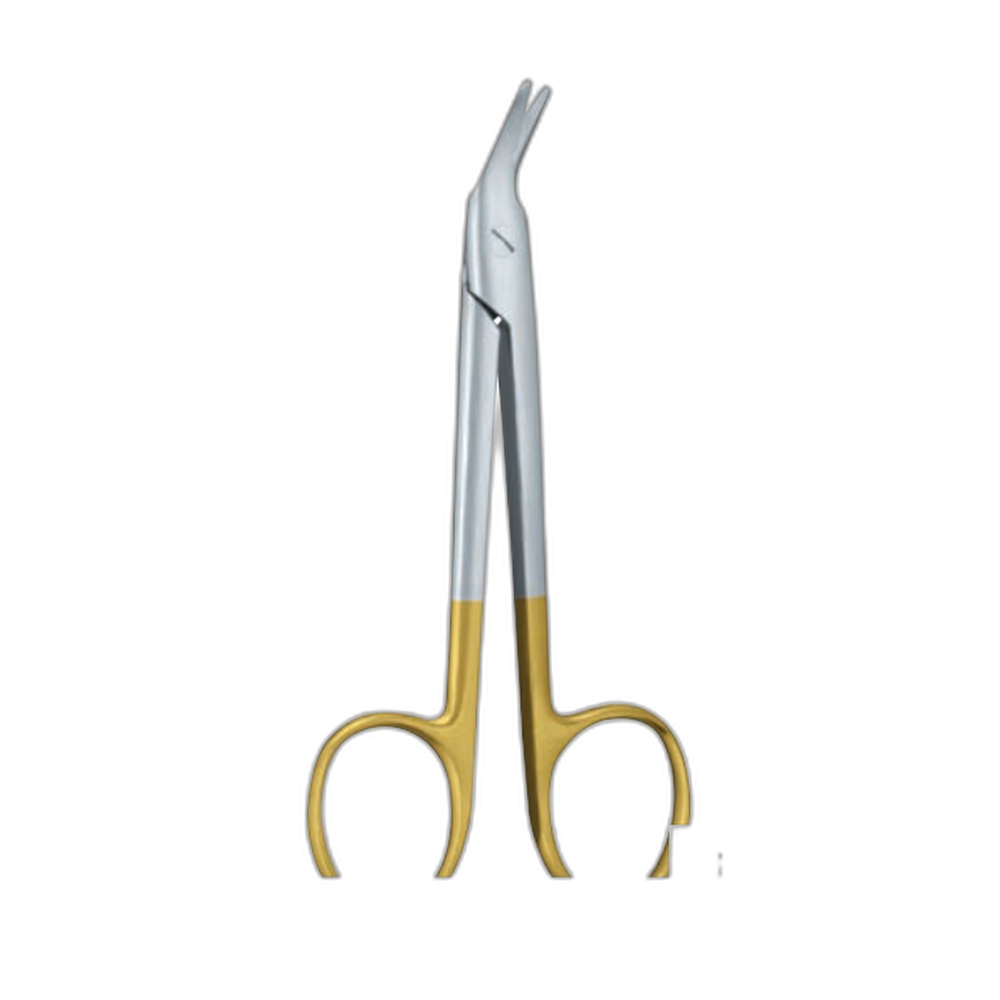
A heavy side-cutting or end-cutting wire cutter trims the twisted tail to a few millimetres so it can be bent flat against the bone. The cutter has to be rated for the wire gauge in use; a tissue scissor or a light cutter will notch and spring rather than cut cleanly, leaving a sharp burr.
Cerclage Instrument Specifications at a Glance
| Instrument | Typical Spec | Function |
|---|---|---|
| Wire passer (small) | ~45 mm curve radius | Forearm, hand, small long bones |
| Wire passer (large) | ~70 mm curve radius | Femur, tibia, humerus |
| Wire tightener | Ratcheted twist mechanism | Even tensioning and flush twist |
| Wire cutter | Rated to 1.0–1.5 mm wire | Trimming the twisted tail |
| Cerclage wire | 0.8–1.5 mm, 316L or CoCr | The encircling loop itself |
Wire Gauge and Material
Monofilament cerclage wire is usually 0.8 to 1.5 mm in diameter. Thinner wire conforms more easily but breaks under cyclic load; heavier wire is stronger but harder to tension and more prone to stripping periosteum if dragged. Surgical-grade 316L stainless is standard; cobalt-chromium and multifilament cable systems are used where higher fatigue strength is needed, such as periprosthetic fixation. Multifilament cable distributes load better than monofilament wire but needs its own crimp-and-tension system rather than a simple twist.
Technique Notes That Protect the Result
A few points separate a durable cerclage from one that fails:
Pass the wire in a subperiosteal plane only where necessary, and keep the passer curve flush to the bone so you are not levering soft tissue off the cortex.
Tension evenly. A wire that is tight on one side and loose on the other will loosen under the first loading cycle.
Keep the twist short and bend it flat against the bone. A proud twist is the most common cause of soft-tissue irritation and hardware prominence.
Use at least two loops spaced apart for rotational control on a spiral fracture; a single loop can act as a hinge.
Single Loop vs Multiple Loops
The number of loops is a decision, not a default. A single cerclage loop around a spiral or oblique fracture can behave like a hinge — it controls translation at that one level but allows the fragment to rotate around the wire. Two or three loops spaced along the fracture line resist rotation and share the load, which is why definitive cerclage constructs almost always use more than one. The trade-off is soft-tissue exposure: every additional loop means another pass with the wire passer and another point where the periosteum can be stripped. Balancing rotational control against biological cost is the judgement call, and having the right cerclage wire instruments to hand — correctly sized passers so each pass is clean — is what keeps that cost low.
Provisional vs Definitive Use
The instruments are the same; the intent differs. In provisional cerclage the loop holds a reduction just long enough for the definitive implant to go in, and the wire is often removed once the plate or nail is seated. Because it is temporary, a single well-placed loop under moderate tension usually suffices. Definitive cerclage — the loop stays as part of the final construct — demands more: multiple loops, careful tensioning, flush twists bent against the bone, and often a heavier gauge or a multifilament cable. Knowing which you are doing before you start dictates how many loops you pass and how aggressively you tension them.
Common Errors and How the Instruments Prevent Them
Most cerclage failures trace back to three avoidable mistakes. A loose loop — the result of uneven tensioning — migrates and loses reduction; a dedicated tightener fixes this by pulling both ends evenly before the twist. A proud twist that irritates soft tissue comes from cutting the tail too long or bending it away from the bone; a properly rated cutter lets you trim short and bend flush. And periosteal stripping, the classic criticism of cerclage, comes from dragging a mismatched passer against the cortex; the answer is simply having the right curve radius on the tray for the bone in front of you.
How Cerclage Fits with Other Fixation
Cerclage rarely stands alone in modern practice. It provisionally holds a reduction for intramedullary nailing, supplements a plate-and-screw construct, or stabilises fragments held by bone-holding reduction forceps during definitive fixation. Building the cerclage instruments into the wider orthopaedic tray — rather than treating them as an afterthought — means the passer, tensioner, and cutter are sterile and matched to the bone when the moment comes.
All of these are part of our bone surgery instrument range, forged and finished to the same ISO 13485 standards as the rest of the fracture-fixation set.
Frequently Asked Questions
What instruments are needed for wire cerclage?
Three core instruments: a wire passer to carry the wire around the bone, a wire tightener to tension and twist it evenly, and a heavy wire cutter to trim the tail. The wire itself, usually 0.8–1.5 mm 316L, completes the set.
What size wire passer should I use?
Match the curve radius to the bone. A smaller radius (around 45 mm) suits the forearm and hand; a larger radius (around 70 mm) suits the femur, tibia, and humerus. A mismatched curve forces levering against soft tissue.
Why not tension cerclage wire with a needle holder?
A needle holder gives uneven tension and leaves a proud twist that can loosen under load and irritate soft tissue. A dedicated tightener applies measured tension and twists flush at the base.
What gauge of cerclage wire is standard?
Between 0.8 and 1.5 mm depending on the bone and load. Thinner wire conforms better but fatigues sooner; heavier wire is stronger but harder to tension and more likely to strip periosteum if dragged.
Need precision surgical instruments?
Configure complete instrument sets with our team — ISO 13485 certified, CE marked, made in Sialkot since 1980.
Related Guides
View all articles →

Where We Serve
Fizza Surgical exports to 50+ countries. Browse our country-specific pages with local regulatory guidance and pricing: